by Michael Frye | Jul 24, 2016 | Light and Weather
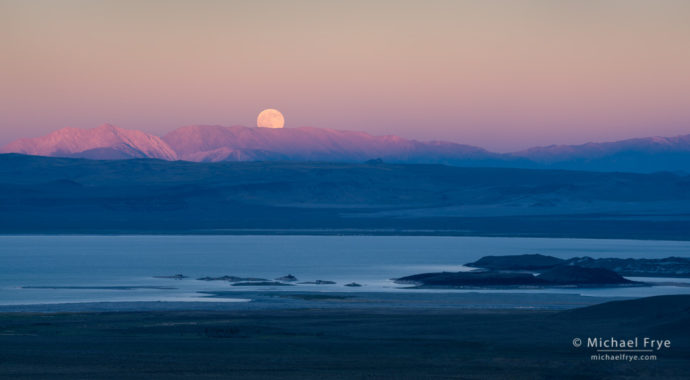
Moon rising above Mono Lake and the White Mountains at sunset, CA, USA
In this previous post I wrote about some of the common misconceptions about photographing the full moon. For example, many people assume that full-moon photographs are taken at night, but in fact most are taken at sunrise or sunset when the light of the moon and landscape are in balance. And it’s often better to take these photographs on the days before or after the actual full moon, not when the calendar says “full moon.” That post helps explain some of the gyrations of the sun and moon so you can understand the best times to photograph the moon above a landscape. There are also some excellent apps that can help you pin down precisely where and when the moon will rise and set. The best of these are PhotoPills and The Photographer’s Ephemeris, and I used both to figure out where and when to take our group during the workshop.
(more…)
by Michael Frye | Jul 10, 2016 | Night Photography
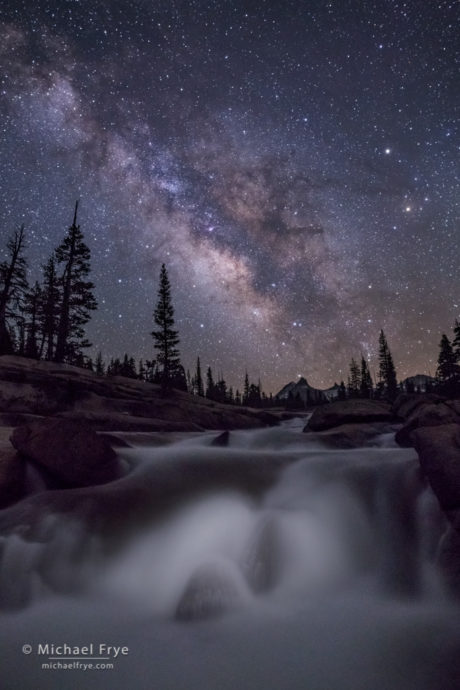
Milky Way over the Tuolumne River, Yosemite; 15 seconds at f/2.8, ISO 6400
On Wednesday afternoon Claudia and I headed up to the beautiful, cool Yosemite high country. We photographed a flower-filled meadow, followed by a picnic dinner at Olmsted Point. Then after sunset we hiked out along the Tuolumne River.
Skies have been clear lately – not ideal for daytime landscapes, but perfect for photographing the night sky. And with a new moon it was the right time to see dark skies with lots of stars. I had used PhotoPills to figure out when the Milky Way would line up above some cascades along the Tuolumne River, which seemed like an interesting combination. But even if that didn’t work, Claudia and I just wanted to get out and enjoy a starry night in the high country.
(more…)
by Michael Frye | Jul 1, 2016 | Announcements
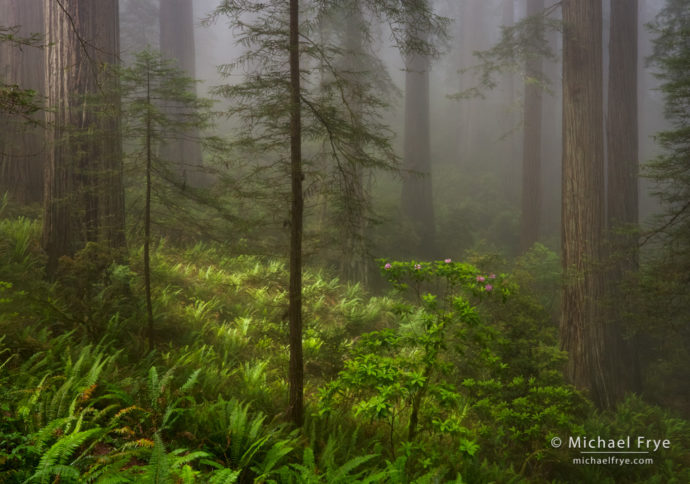
Redwoods, ferns, and rhododendrons near the northern California coast, USA
A few months ago I had the pleasure of talking with Tiffany Briley from Landscape Photography Magazine, and that interview has just been published in the latest issue. Our conversation covered a wide range of subjects, including the importance of light, predicting the weather, sources of inspiration, image processing, and equipment – among many other things.
(more…)
by Michael Frye | Jun 30, 2016 | Light and Weather
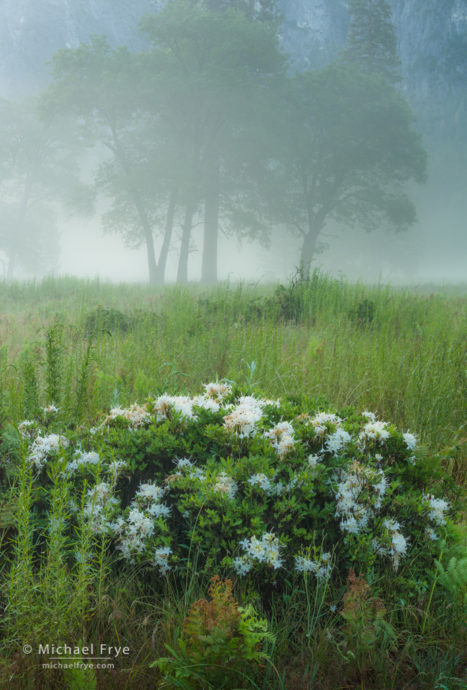
Oaks and azaleas in the fog, Yosemite NP, CA, USA
One of the biggest challenges in landscape photography is deciding where to go and what to photograph. Technical skill and an eye for composition are always important, but it certainly helps to put yourself in the right place at the right time.
Of course everyone has their own preferences about the types of subjects and images they’d like to photograph, and that’s always part of the equation. And different people can have different but equally successful approaches to finding the subject matter that suits them.
(more…)
by Michael Frye | Jun 23, 2016 | Composition
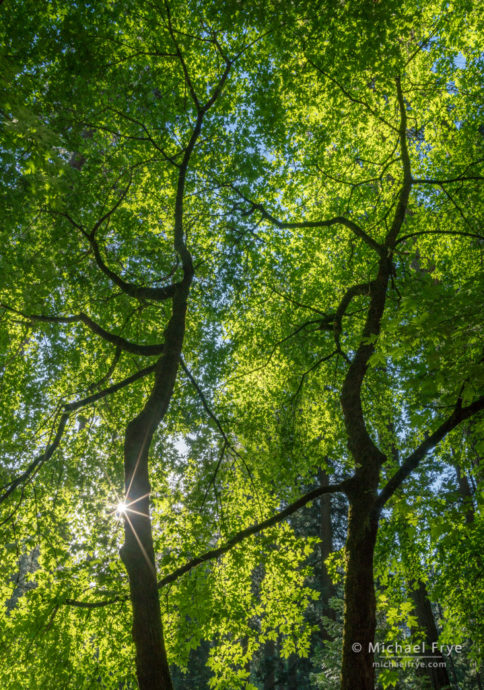
Big-leaf maples in spring, Yosemite NP, CA, USA
A couple of weeks ago Claudia and I were in Yosemite Valley and drove past this maple with beautiful, backlit, bright-green leaves. So we stopped to see if there might be a photograph there. At first I couldn’t find a composition. Although the glowing leaves were beautiful, the light was splotchy, and this tree was right above a tent cabin in Housekeeping Camp, so it was difficult to keep that tent and others out of the picture.
But it seemed like there was something there, so we persisted, me with my big camera, Claudia with her iPhone. The visual clutter caused by the splotchy light, random arrangements of branches, and distracting background objects (the tent cabins) initially seemed to warrant using a telephoto lens, and focusing on a section of the leaves. The longer lens would help simplify things, keep the clutter to a minimum, and focus attention on the leaves themselves, which were what originally caught my eye. But I couldn’t find a group of leaves that had a strong enough pattern, and the photographs didn’t convey the feeling of those glowing leaves.
(more…)