In the Moment:
Michael Frye's Landscape Photography Blog
by Michael Frye | Jul 11, 2025 | Announcements
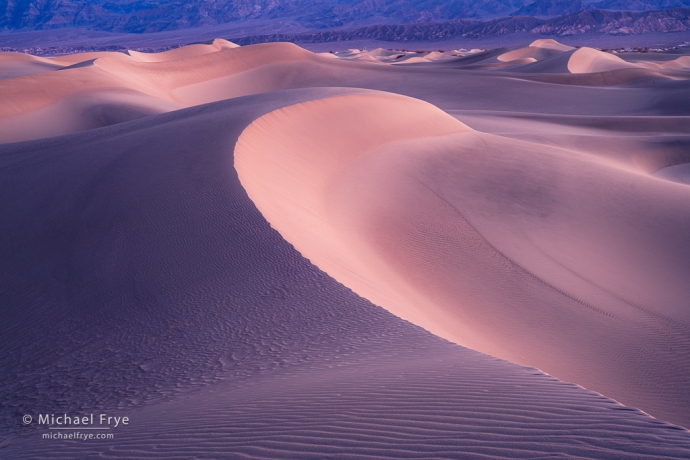
Make Your Workflow Faster and More Efficient By Mastering Lightroom’s Powerful Retouching Tools
Retouching can be a tedious chore. Even removing simple dust spots can be time-consuming, and more complex tasks take even longer. So the last thing you want is to do it over again! But unfortunately that’s always a possibility when you do retouching in Photoshop, even if you do it on a separate layer. What if you need to go back and modify the original raw file settings in Lightroom? Or what if Adobe adds a new feature for Lightroom (like a fantastic new Denoise tool) that you want to take advantage of? Now your cloning layer won’t match the new raw-file settings, and you’ll have to do the retouching over again.
But if you do the retouching in Lightroom you’ll NEVER have to do it again, because the retouching will always adapt seamlessly to any changes you make to the raw file – plus you can simplify your workflow by avoiding the roundtrip to Photoshop and back. This Lightroom-only workflow has become much easier in recent years as Adobe has added powerful new retouching tools to Lightroom, making it possible to do even complex jobs with relative ease. Because of Lightroom’s power and flexibility, I never do retouching in Photoshop anymore if I can possibly help it.
(more…)
by Michael Frye | Jul 6, 2025 | Travels and Stories
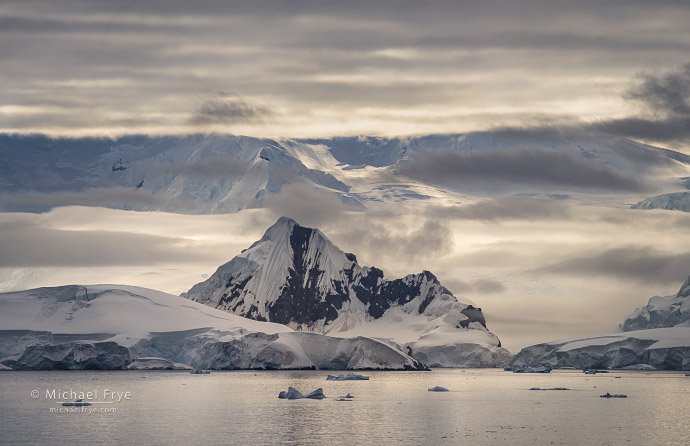
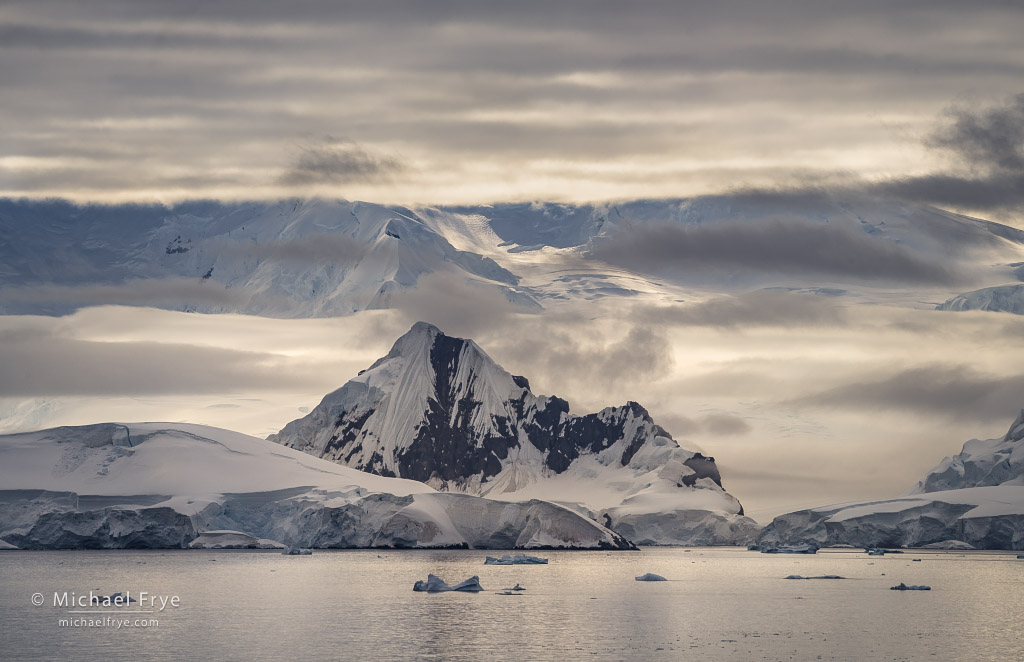
Mountains and glaciers, Antarctica
As we dive into the heat of summer, my thoughts sometimes return to the icy world of Antarctica.
People think of Antarctica as a super-cold place. But we were there in late January, which is the middle of summer down there. Most of the sea ice had melted, so there was plenty of open water, which moderated the air, and kept temperatures right around the freezing point. Not exactly balmy, but quite tolerable. I’ll take that over the summer heat here in Mariposa, where temperatures sometimes reach over 100 degrees Fahrenheit.
Of course the ice-free seas and mild temperatures don’t last long in Antarctica. In March, as the days get shorter, and temperatures drop, the sea ice starts to re-form. At Vernadsky, a Ukrainian research station on the Antarctic Peninsula that we visited during our January trip, scientists who spend the winter there have to be completely self-sufficient for six months. Ships can’t reach them because of the pack ice, and there’s no airstrip.
(more…)
by Michael Frye | Jun 29, 2025 | Light and Weather
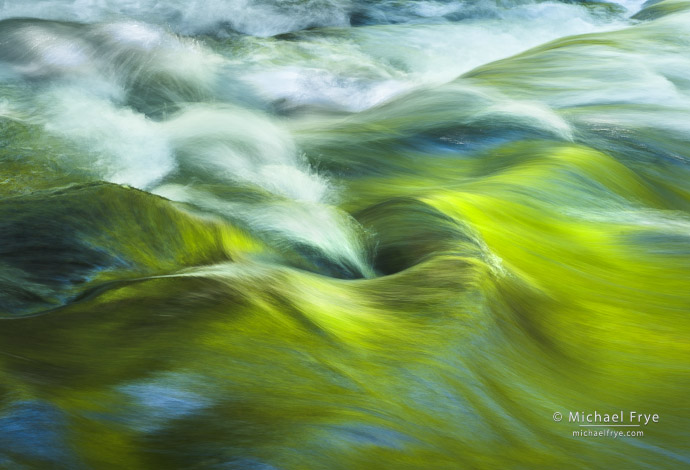
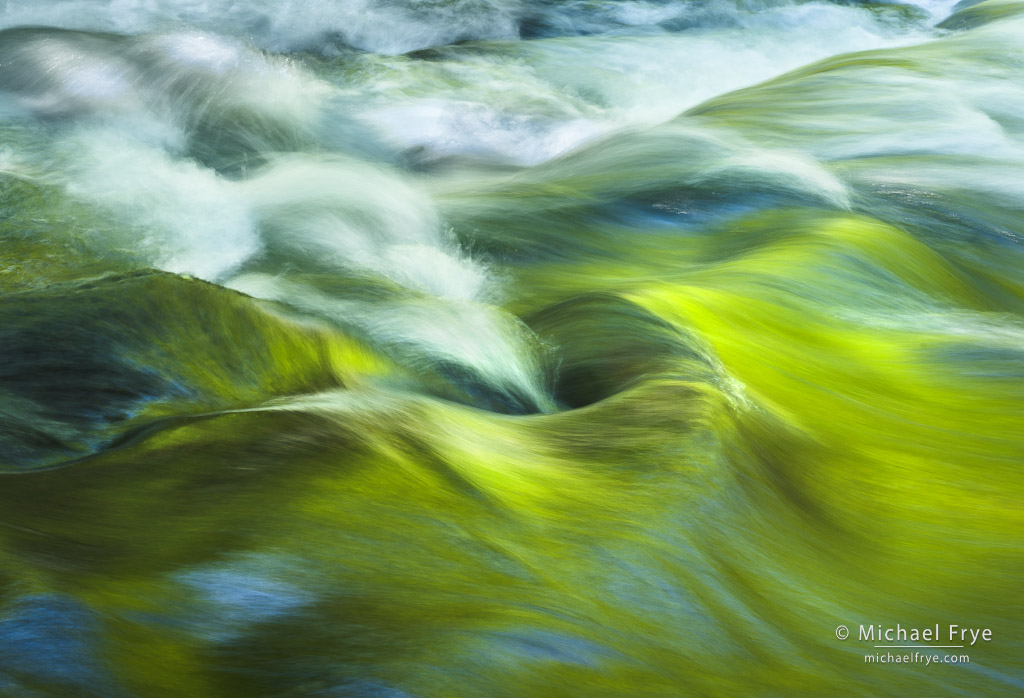
Cascade and spring reflections, Great Smoky Mountains NP, Tennessee. I loved the repeating patterns created by the standing waves in this cascade, coupled with the vivid green reflections. 52mm, 1/3 sec. at f/16, ISO 100.
You can find every shade of green in the Smokies in spring – light green, dark green, blue-green, yellow-green, and everything in between. Occasionally the greens are mixed with a splash of blue sky or white water, but it’s a green world.
Our eyes and brains can distinguish more shades of green than any other color. The cones in our retinas, which perceive color, are more sensitive to green wavelengths than other colors – not surprising for a species that evolved in African forests, where distinguishing between shades of green helped find food and avoid predators.
(more…)
by Michael Frye | Jun 28, 2025 | Announcements
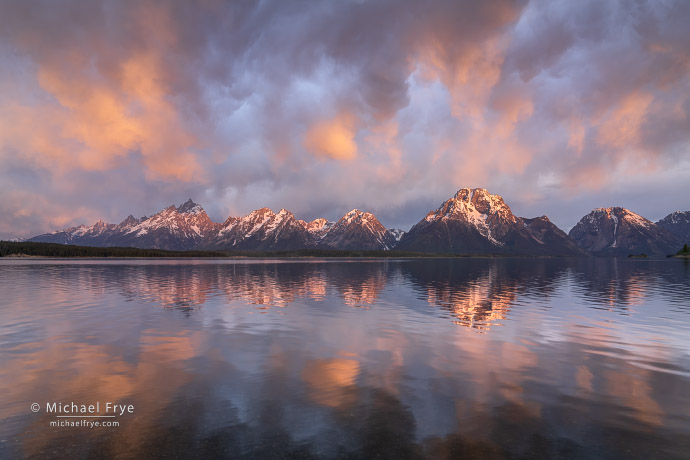
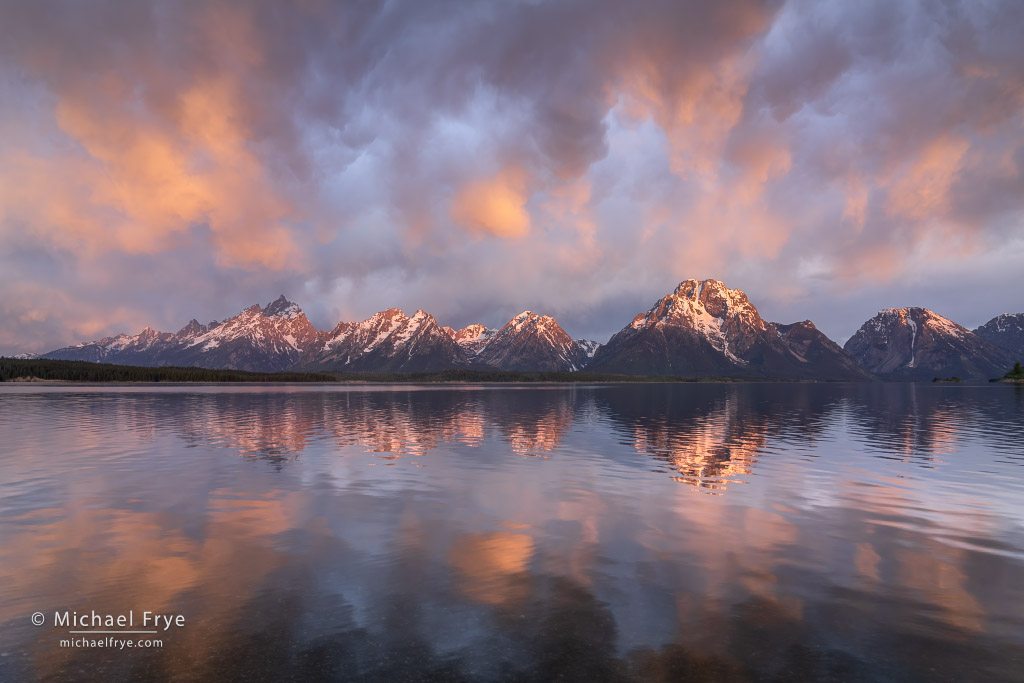
The Teton Range from Jackson Lake at sunrise, Grand Teton NP, Wyoming
I’m excited to be going back to Wyoming for another Out of Grand Teton photo conference in autumn of 2026!
I was an instructor for the first Out of Grand Teton conference last June, and it was so much fun. The Tetons are known for their spectacular mountain landscapes, and rightfully so – the scenery is amazing. But it’s also a wonderful place to photograph wildlife and intimate scenes. I think everyone in the conference enjoyed photographing all of it; I certainly did! We captured some memorable sunrises and sunsets, photographed beautiful flowers, trees, and ponds, and had memorable wildlife encounters with moose, bears, otters, a fox, and a host of other animals.
(more…)
by Michael Frye | Jun 15, 2025 | Light and Weather, Vision and Creativity
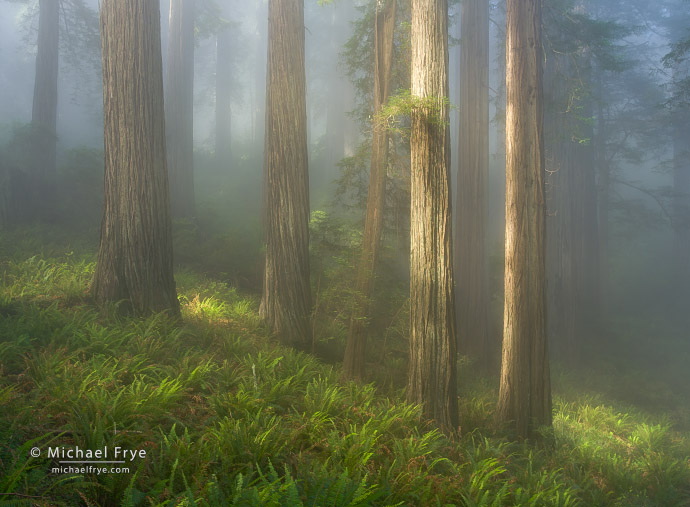
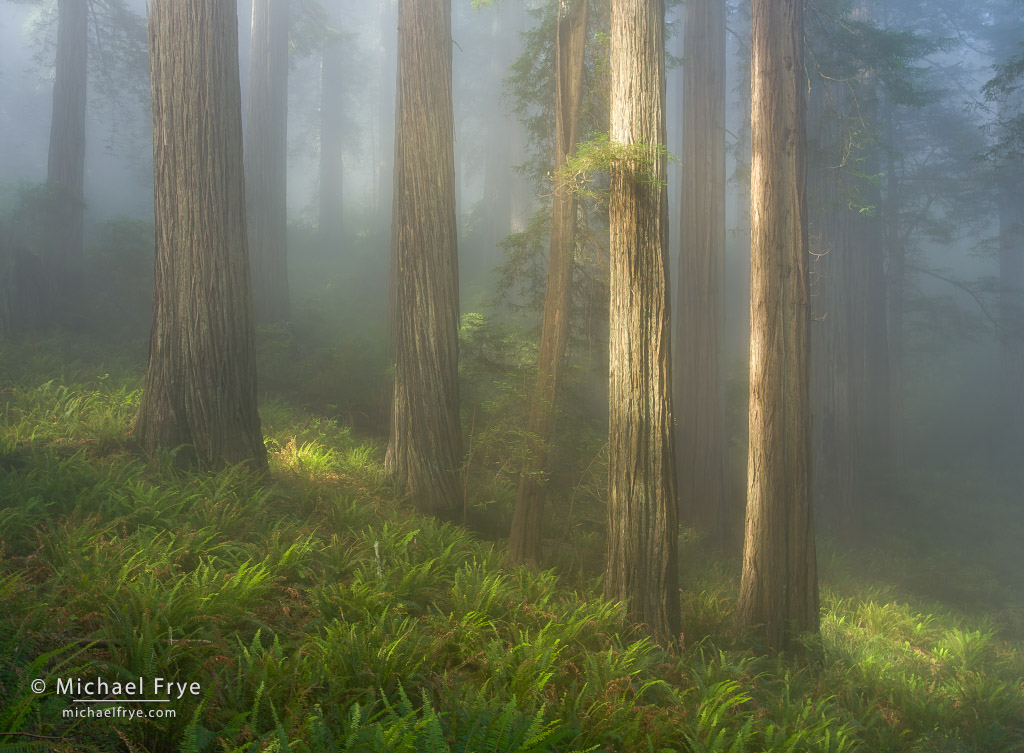
Sunlight, fog, and redwoods, Northern California
Claudia and I recently returned from two weeks in the far northwest corner of California among the redwoods. And we loved it there, as always. It’s one of my favorite places on the planet.
I love forests in general, including the hardwood forests in the eastern U.S., the conifer forests of Yosemite, aspens in the western mountains, and the moss-draped, old-growth forests of the Olympic Peninsula. They’re all great.
But the redwoods are extra-special to me. Among these giant trees, I feel like I’ve been transported back in time. It’s easy to imagine dinosaurs roaming forests like these – because they did. During the Cretaceous period, the height of the dinosaur’s reign, some 145 to 66 million years ago, ancestors of redwoods were abundant, covering large tracts of the northern and southern hemispheres. If redwood forests seem ancient and primeval to me, it’s because they really are ancient. That earthy smell of redwoods and ferns I notice when I enter a redwood forest was probably familiar to many dinosaurs.
(more…)
by Michael Frye | May 26, 2025 | Travels and Stories, Vision and Creativity
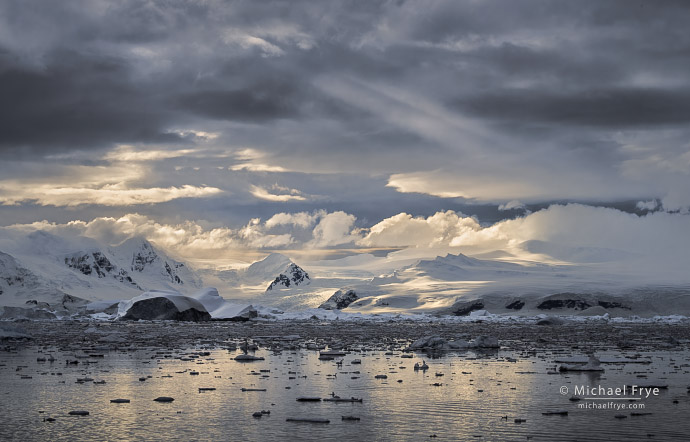
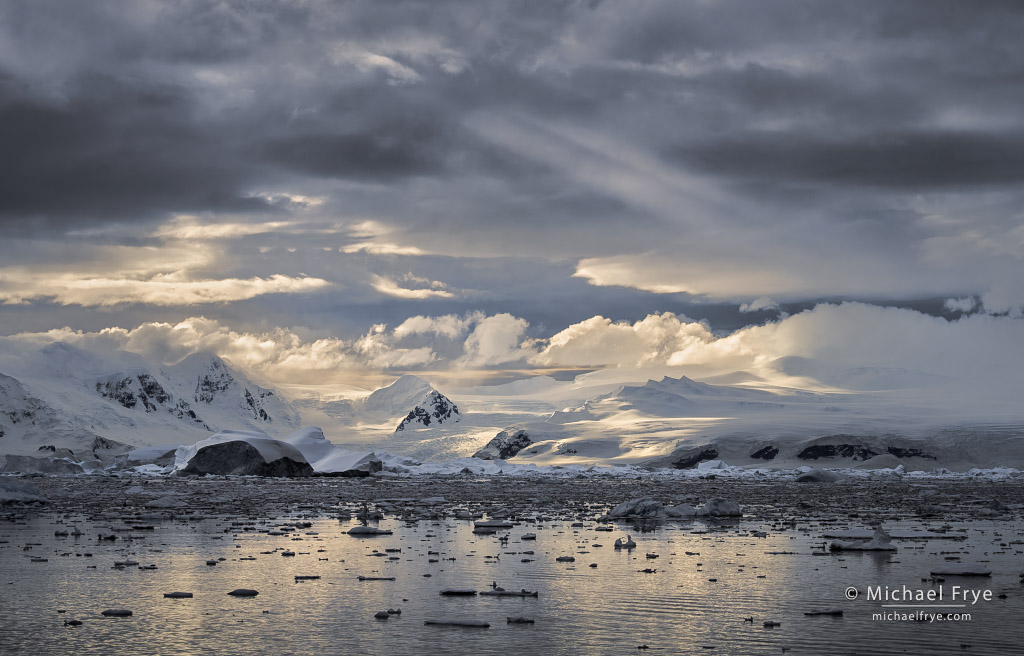
Clouds, sunbeams, and mountains, Antarctica. One of the things that surprised me about Antarctica was how bright it was. I expected some dramatic, even gloomy weather – and we got a little of that. But the days were long; it never got completely dark. And all that ice, snow, and water reflected lots of light, making everything luminous. So some of my favorite landscape images of Antarctica capture a bit of the drama of that incredible place, but also show some of the luminosity.
There’s value in photographing familiar places. Whether it’s somewhere near home, or a spot you visit repeatedly, the better you know an area, the better you’ll be able to know where to go under different conditions. And maybe more importantly, you can forge a deeper connection with that place, and that tends to manifest itself in your photographs.
On the other hand, it’s exciting to travel to new, unfamiliar destinations. We only have so much time on this earth, and most of us would like to see as much of this planet as we can while we’re here – if we have the opportunity to do so.
(more…)
by Michael Frye | May 9, 2025 | Travels and Stories, Vision and Creativity
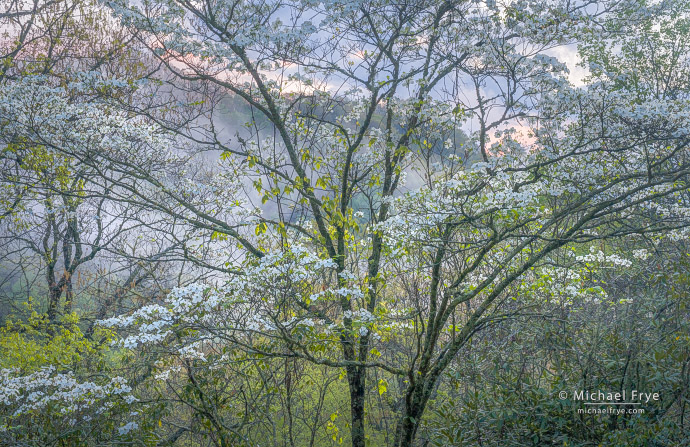
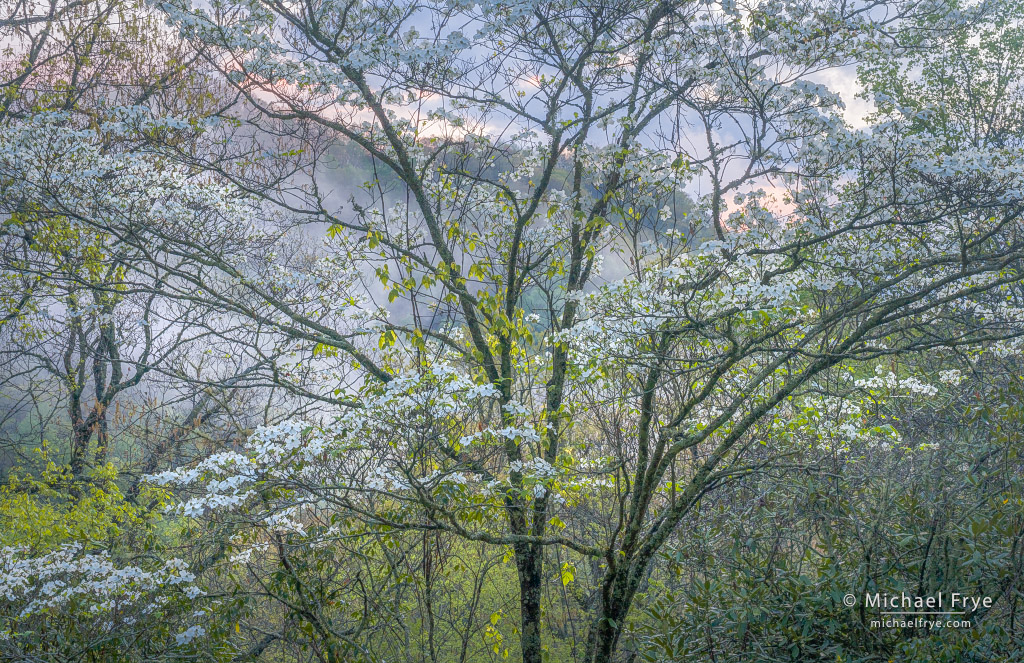
Dogwood and mist at sunset, Blue Ridge Parkway, North Carolina. This isn’t a photograph I expected to make. I almost always keep the sky out of forest compositions, and if I see an interesting sunset developing I’ll usually look for a more expansive view. But here I thought the pastel colors in the sky might complement the softness of the dogwood blossoms and lingering mist, and decided to stick with what was in front of me and see what I could do. It turned out to be one of my favorite images from the trip.
Before visiting the Smokies I’d seen many wonderful photographs of the southern Appalachian Mountains by people like Charles Cramer, Christopher Burkett, William Neill, and Nye Simmons. Their images mostly focused on the forests in spring and fall – understandably, since those eastern hardwood forests are so beautiful in those seasons. So I had certain expectations about what I might see, and the kind of photographs I might make, based on seeing their work.
I certainly hoped and expected to photograph dogwoods blooming. But spring came early to the lower elevations, and the dogwoods were mostly done by the time Claudia and I arrived a week before the conference. We did find a few dogwoods still blooming at higher elevations, so I made it a point to photograph those before they faded. But I realized that I wouldn’t be doing much dogwood photography on this trip, so I had to let go of that expectation and focus on other things.
(more…)
by Michael Frye | May 4, 2025 | Composition, Light and Weather, Travels and Stories
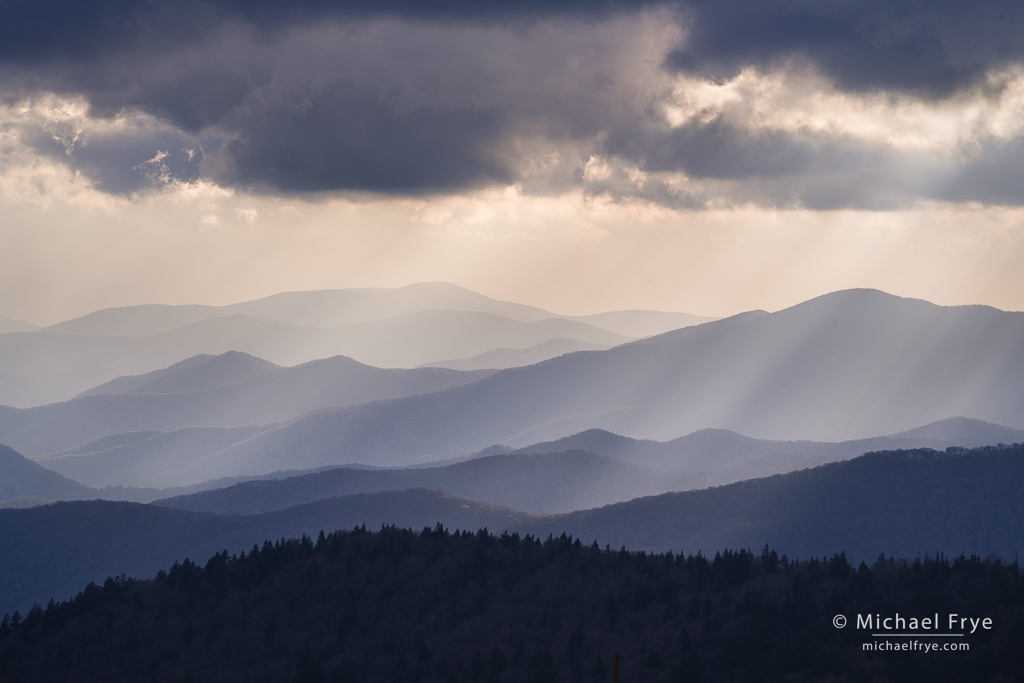
Sunbeams and ridges, Great Smoky Mountains NP, North Carolina
Claudia and I just returned from Tennessee and the Out of the Great Smoky Mountains photo conference. Technically this wasn’t our first visit to Great Smoky Mountains National Park, since eleven years ago we landed briefly in Cherokee, on the North Carolina side of the park, after driving to the southwest terminus of the Blue Ridge Parkway. But for all practical purposes this was our first time exploring the park, and definitely the first time visiting the Tennessee side.
And we loved it. Well, most of it. Gatlinburg is… something. And the traffic in Cades Cove can be crazy. But the park itself is beautiful. I love the hardwood forests of the Smokies, which are so similar to the woods I played in as a child growing up in the Northeast. These forests were especially pretty decked out in their bright spring greens, with rushing creeks and rivers cascading under the arcing branches of the trees.
(more…)
by Michael Frye | Apr 10, 2025 | Composition, Light and Weather
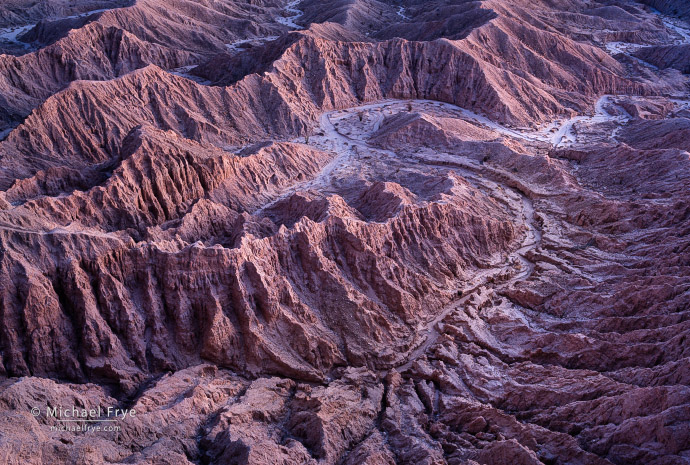
Twisting wash, badlands, Southern California. The curvy lines of the wash and surrounding ridges created a design I could build a composition around. Soft sidelight from the post-sunset glow brought out the forms and textures of the land, without the harshness of direct sunlight.
In late March Claudia and I joined photographer friends in the deserts of Southern California. We enjoyed just hanging out together, but I also got to visit some badlands areas I’d never photographed before, which was lots of fun.
To me, photographing badlands is similar to photographing sand dunes. Both have acres of naked earth, sculpted into interesting shapes and forms by either wind or water. With badlands the shapes are more angular than in dunes, but you can find great designs in both environments.
(more…)
by Michael Frye | Mar 18, 2025 | Travels and Stories, Wildlife Photography
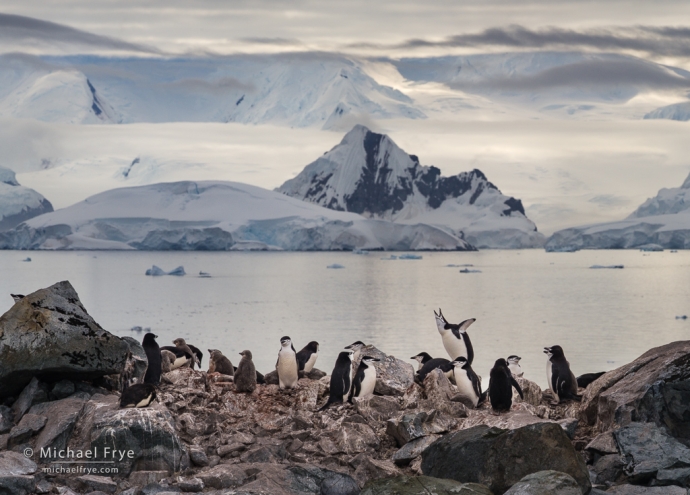
Mountains, glaciers, and chinstrap penguins, Antarctica
At the end of our trip to Antarctica for Visionary Wild, I told Claudia that the thing I was going to miss most was seeing penguins every day. It seemed strange to be heading back to a world without penguins, since they had been a daily part of our lives for two weeks.
And penguins are so much fun to watch. While supremely graceful in water, they’re awkward on land. Yet every day many penguins climb and descend from their nests on slopes so steep they would intimidate most humans. They fall all the time, but always seem to bounce back up and keep going. They’re determined and dedicated parents; they have to be to thrive and reproduce in this harsh environment. And they’re feisty. They won’t tolerate other penguins getting too close to their nest, or intruding on their space.
(more…)