by Michael Frye | Dec 19, 2025 | Announcements
A Landscape Photography Webinar
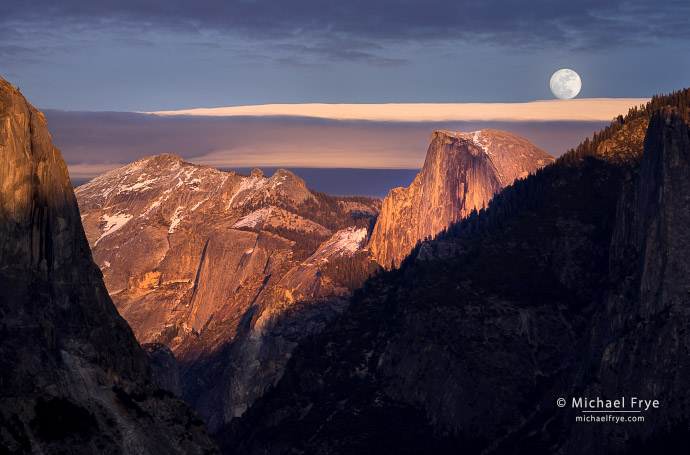
Moon rising above Half Dome from Tunnel View, Yosemite NP, California
Learn how to use simple, powerful tools to plan photos of the sun, moon, Milky Way, or any celestial object
We have powerful tools for photo planning at our fingertips – apps that allow us to predict where the sun or moon might rise or set in relation to the landscape, how the light will look at a given time and place, the position of the Milky Way above the land, and much more.
Unfortunately, many of these tools are excessively complicated, unintuitive, and difficult to learn. I know many photographers who have thrown up their hands and given up when faced with the dense complexity of these apps.
But it doesn’t have to be that way. In this new webinar I’ll show you how I use a few simple tools to precisely visualize the position of the sun, moon, Milky Way (or any celestial object) in relation to the landscape, and see how the light will change for any scene. We’ll delve into apps like PhotoPills, The Photographer’s Ephemeris, The Photographer’s Ephemeris 3D, and Planit Pro – but we’ll stick to the things you need to know, bypassing the extraneous stuff that only gets in the way.
(more…)
by Michael Frye | Oct 5, 2025 | Travels and Stories, Wildlife Photography
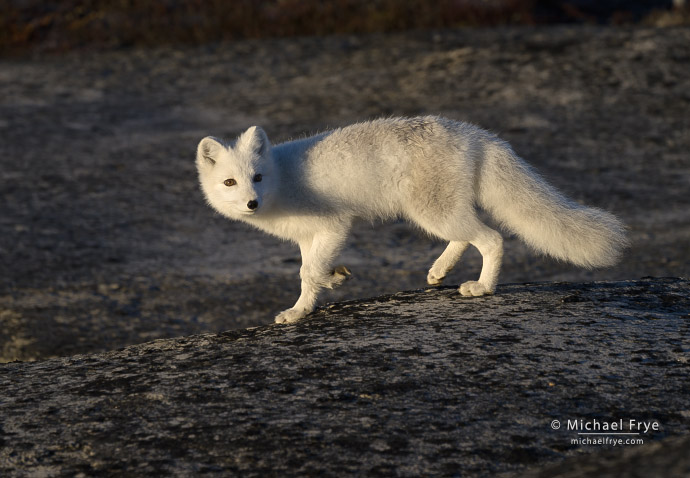
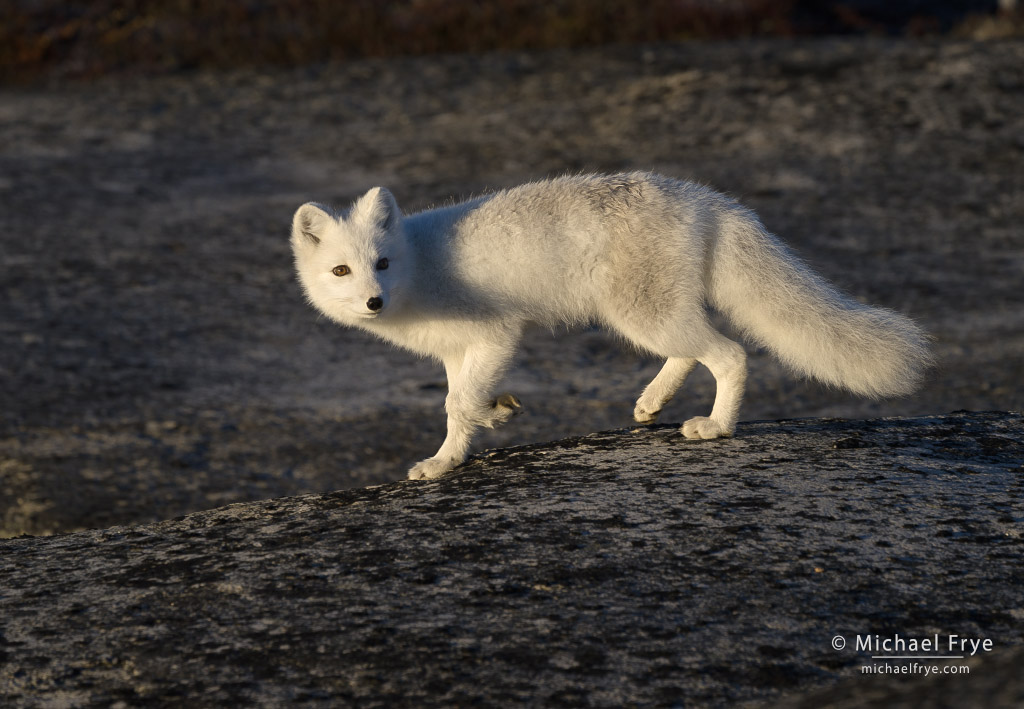
Arctic fox, Scoresby Sund, Greenland
Scoresby Sund, the area of east Greenland we visited on our Visionary Wild trip last month, is spectacularly beautiful. But I didn’t expect to see much wildlife there, because this region is actively hunted by the local Inuit people.
So I was pleasantly surprised by how much wildlife we actually saw, including musk oxen, Arctic hares, Arctic foxes, and polar bears.
(more…)
by Michael Frye | Aug 25, 2025 | Digital Darkroom
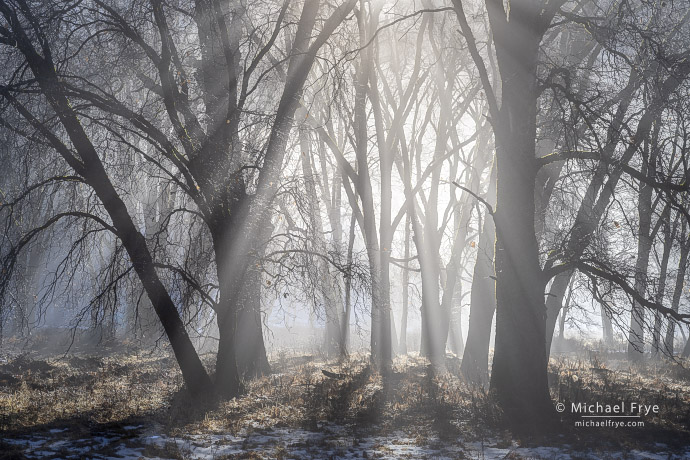
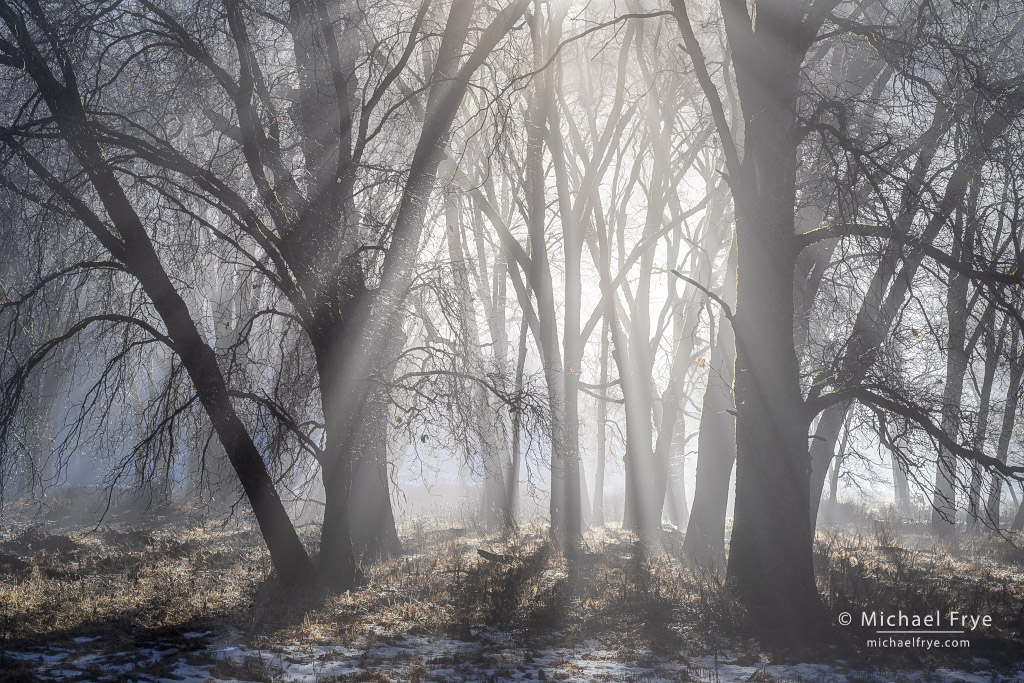
Oaks and mist, Yosemite NP, California. I love the light and fog in this scene, but couldn’t avoid including a distracting wire-mesh enclosure in the composition (see below).
Thanks to everyone who joined us for my Lightroom Webinar: Advanced Retouching on Saturday. It was an engaging, fun, and, I hope, educational session, and it was great to see so many familiar names among the attendees. I appreciate all the thoughtful questions, as they helped broaden the discussion and clarify many points.
One of the things we covered on Saturday was the pros and cons of AI-powered retouching in Lightroom – and how to work around the limitations. Generative Remove in Lightroom and Camera Raw, along with Generative Fill in Photoshop, have certainly made many retouching jobs a lot easier. But one thing that many people don’t realize is that these AI-powered tools can create low-resolution results. So when you remove an object with Generative Remove, that patch, that area where you replaced the object with AI-generated content, might look softer than its surroundings. That’s probably fine for posting an image online, because no one will notice that softness at a small viewing size. But it can be a significant problem when making prints.
(more…)
by Michael Frye | Jul 13, 2025 | Night Photography
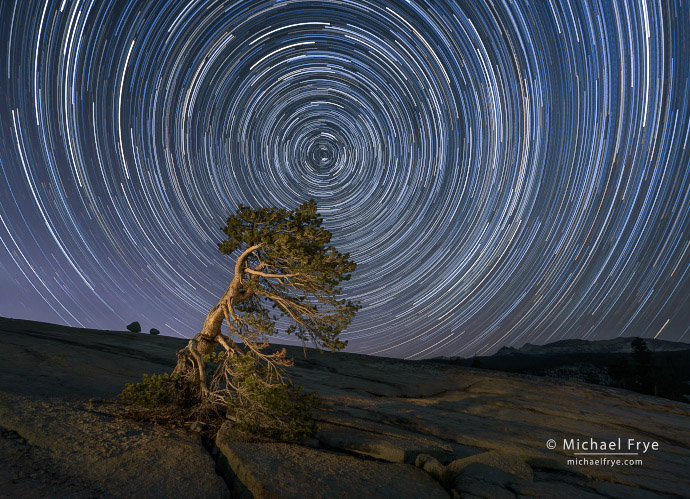
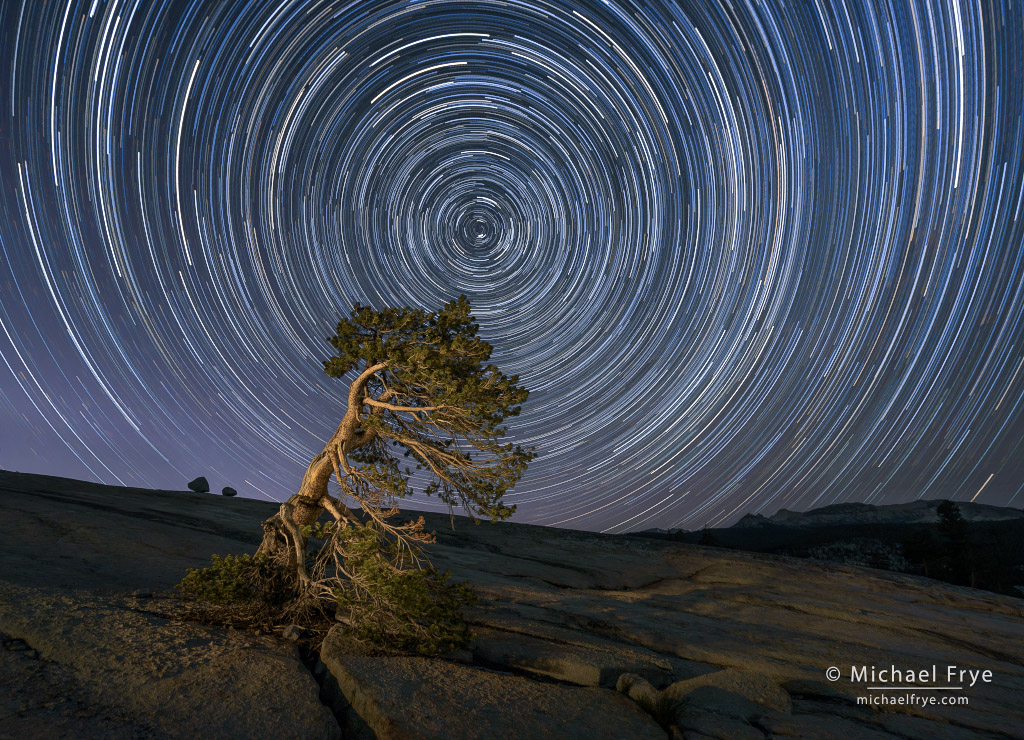
Star trails above a lodgepole pine, Yosemite NP, CA, USA
I think star-trail images have been somewhat neglected in recent years. Most night photographers today concentrate on capturing pinpoint stars and the Milky Way. The Milky Way is certainly beautiful, and modern digital sensors allow virtually anyone to capture the Milky Way without specialized equipment. Even phone cameras can do it. So all that is understandable.
With film you needed a star-tracker to capture the Milky Way, and it was virtually impossible to combine that Milky Way image with a stationary landscape in the foreground. But it was easy to capture star trails by just putting the camera on a tripod and leaving the shutter open for a long time. So star-trail photos became common long before Milky Way images filled up our Instagram feeds.
(more…)
by Michael Frye | Jun 29, 2025 | Light and Weather
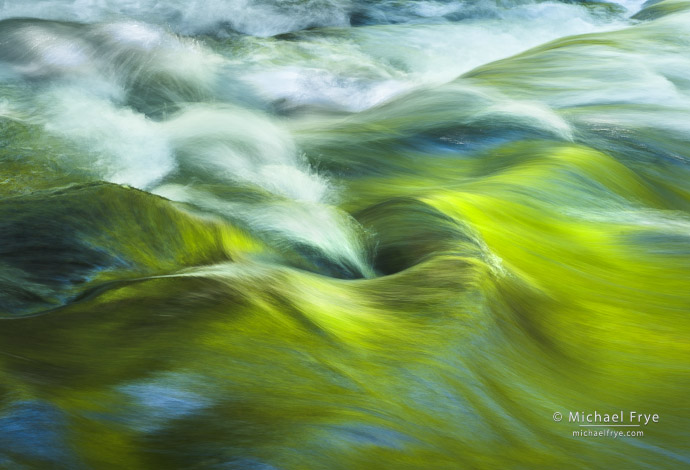
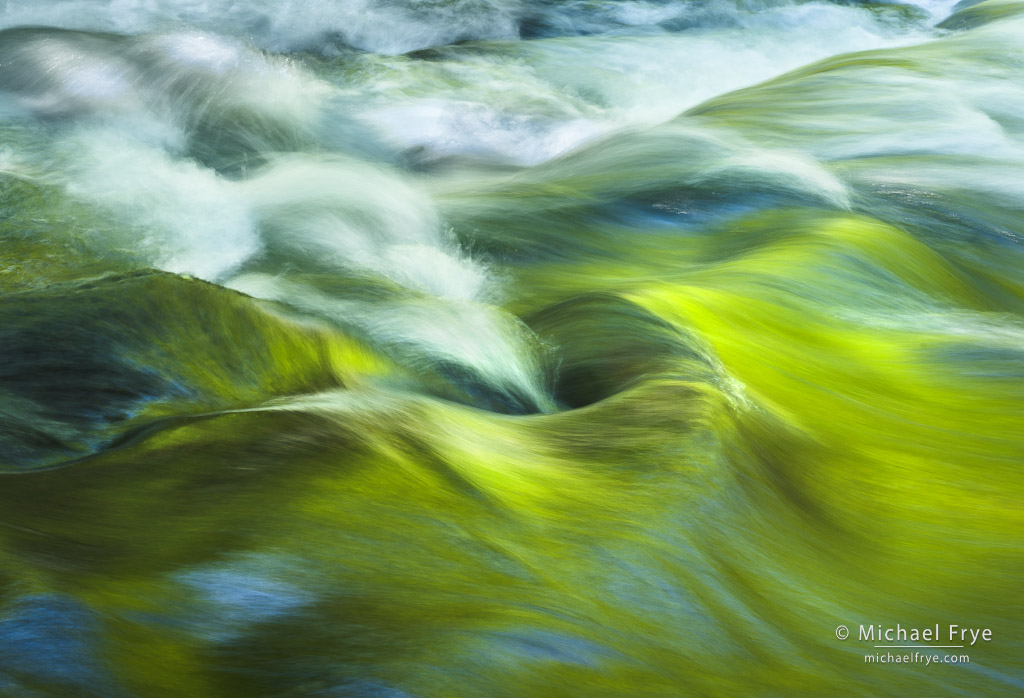
Cascade and spring reflections, Great Smoky Mountains NP, Tennessee. I loved the repeating patterns created by the standing waves in this cascade, coupled with the vivid green reflections. 52mm, 1/3 sec. at f/16, ISO 100.
You can find every shade of green in the Smokies in spring – light green, dark green, blue-green, yellow-green, and everything in between. Occasionally the greens are mixed with a splash of blue sky or white water, but it’s a green world.
Our eyes and brains can distinguish more shades of green than any other color. The cones in our retinas, which perceive color, are more sensitive to green wavelengths than other colors – not surprising for a species that evolved in African forests, where distinguishing between shades of green helped find food and avoid predators.
(more…)