Light and Weather
by Michael Frye | Apr 19, 2026 | Light and Weather
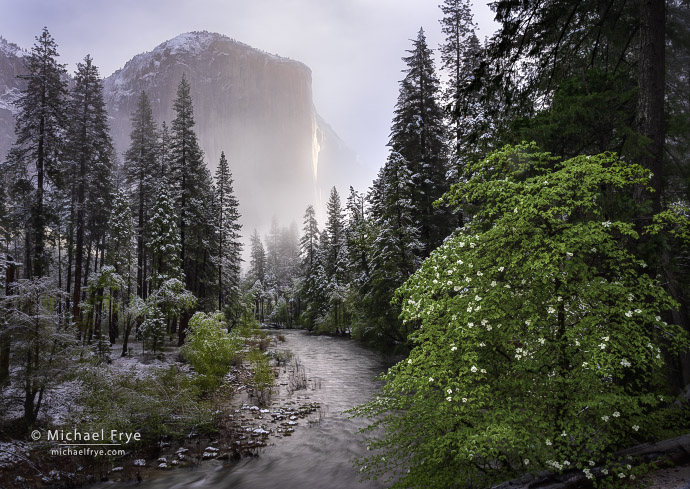
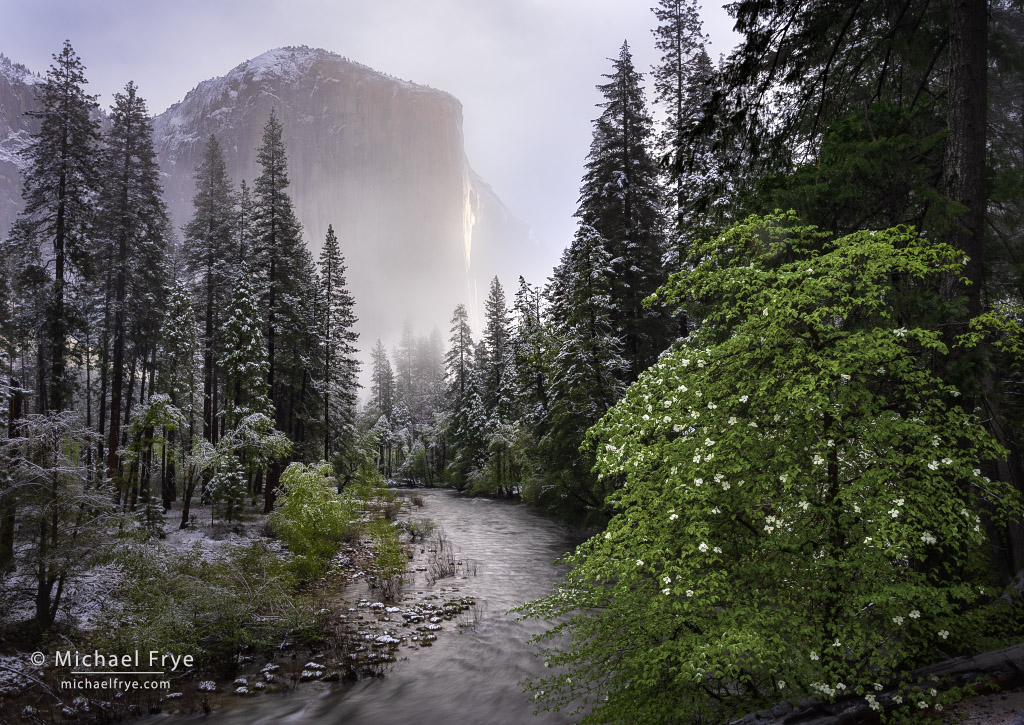
El Capitan and the Merced River after a spring snowfall, Yosemite NP, California
Last Sunday another small weather system came through California. This one was colder – cold enough to turn rain into snow in Yosemite Valley toward the end of the storm. It was wet snow, and melted quickly, but it was enough to briefly etch the tree branches in white.
Seeing snow and mist on the webcams, I drove up early Sunday morning to the valley to see what I could see. One thought was to try and photograph dogwoods with snow. The dogwoods started blooming early this year, no doubt because of the strange, warm weather we had in March.
(more…)
by Michael Frye | Apr 12, 2026 | Announcements, Light and Weather
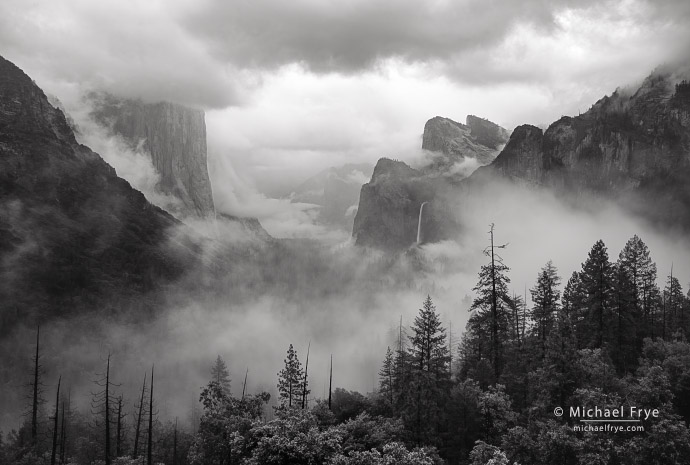
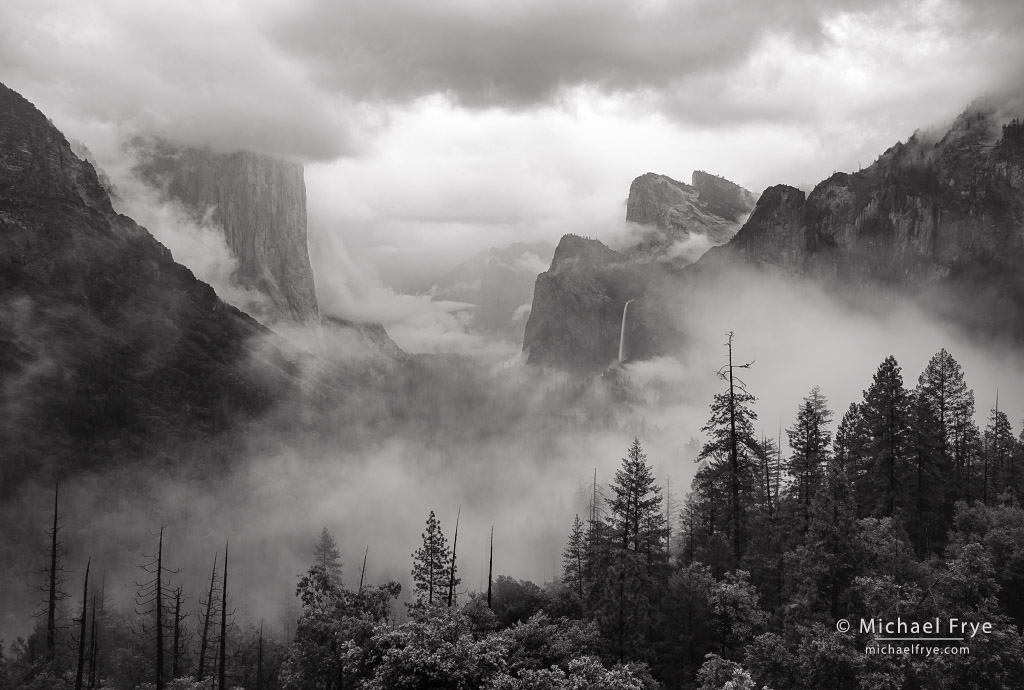
Stormy afternoon at Tunnel View, Yosemite NP, California
The weather is upside down here in central California. Our wettest season, winter, was exceptionally dry. But now that spring has arrived the storms have returned. We’ll take it – we need the rain, and, as the saying goes, it’s better late than never.
And just to make things more interesting, over the last few days unstable air has triggered numerous thunderstorms, with lots of lightning and thunder. That’s quite unusual for this part of the world.
(more…)
by Michael Frye | Apr 5, 2026 | Light and Weather
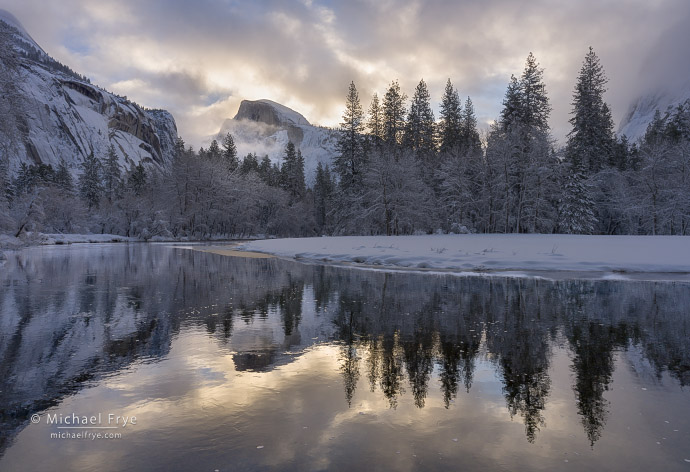
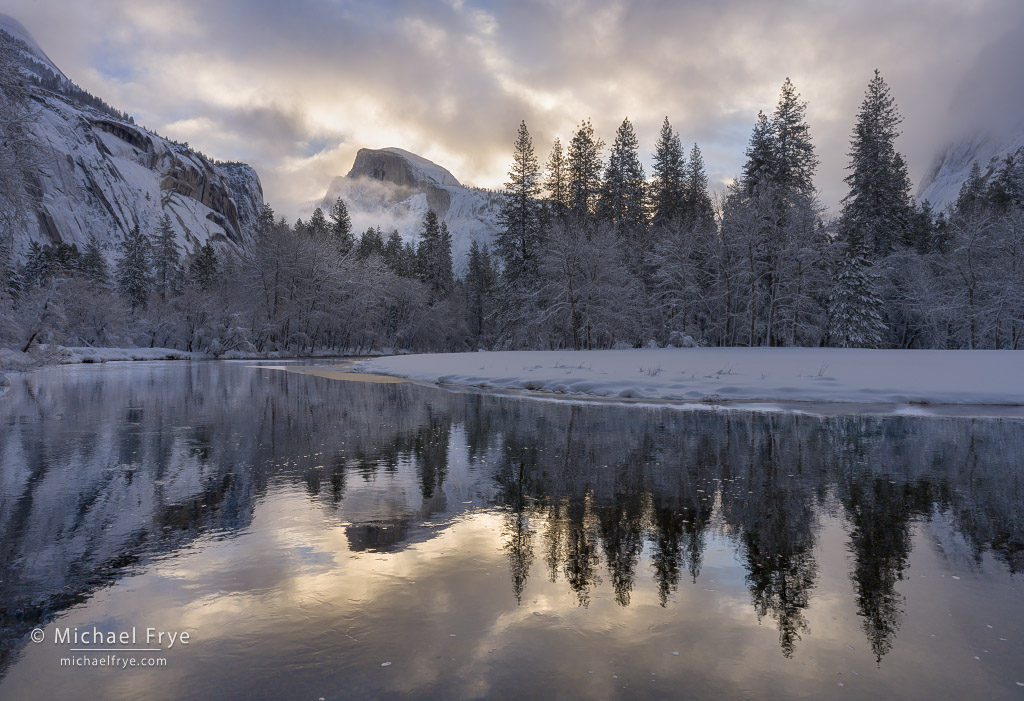
Half Dome and the Merced River at sunrise, Yosemite NP, California
Claudia and I have been home for a couple of weeks, which is a nice break from our travels. I love all the trips we’ve been able to go on, but it feels good to chill out a bit at our own house, and sleep in our own bed.
And we don’t have to travel far from home to be in an exotic location, since we live only an hour away from Yosemite Valley.
(more…)
by Michael Frye | Mar 29, 2026 | Light and Weather, Travels and Stories
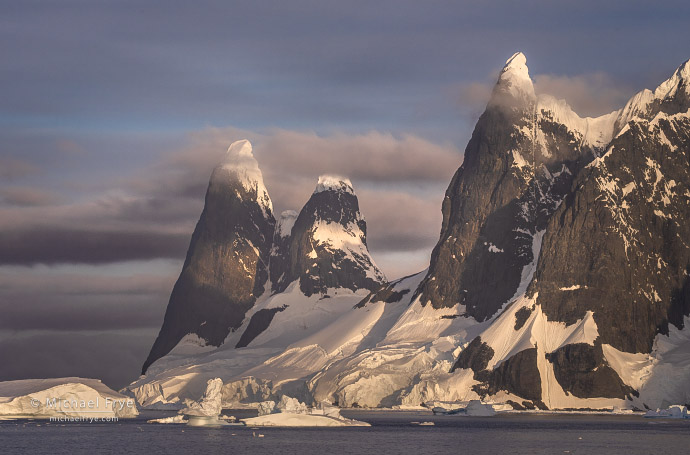
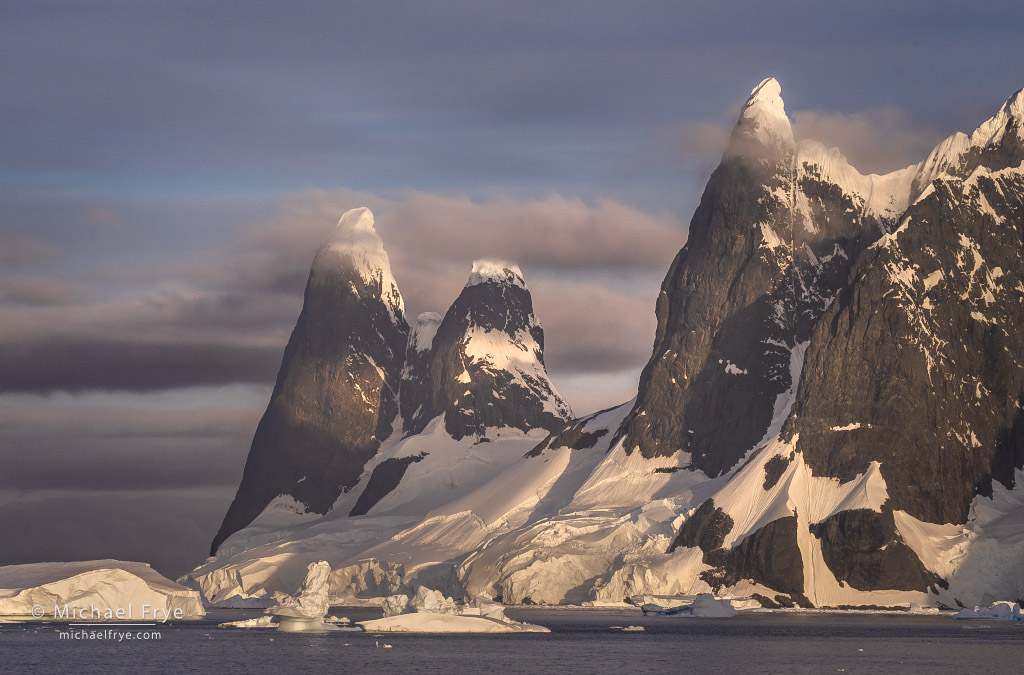
Snow-capped spires, Antarctica. 158mm, 1/500 sec. at f/11, ISO 500.
It’s taken me a long time to go through all my photos from our January trip to Antarctica – all 41,000 of them! I previously posted images of natural ice sculptures, and penguins. But this time I thought I’d focus on wider landscapes, and the beautiful Antarctic light.
Antarctic light is special. When we arrived in early January the sun rose at 2:45 a.m., and at an azimuth of about 160 degrees. That’s just a tad to the east of due south (180 degrees). Then the sun carved a low path through the sky to the east, north, and west, finally setting (at midnight) just a little bit west of where it rose, at an azimuth of about 200 degrees. It never got truly dark.
(more…)
by Michael Frye | Dec 14, 2025 | Light and Weather
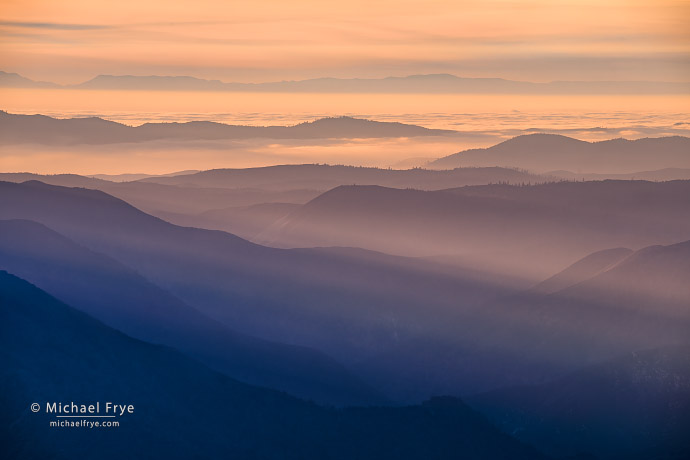
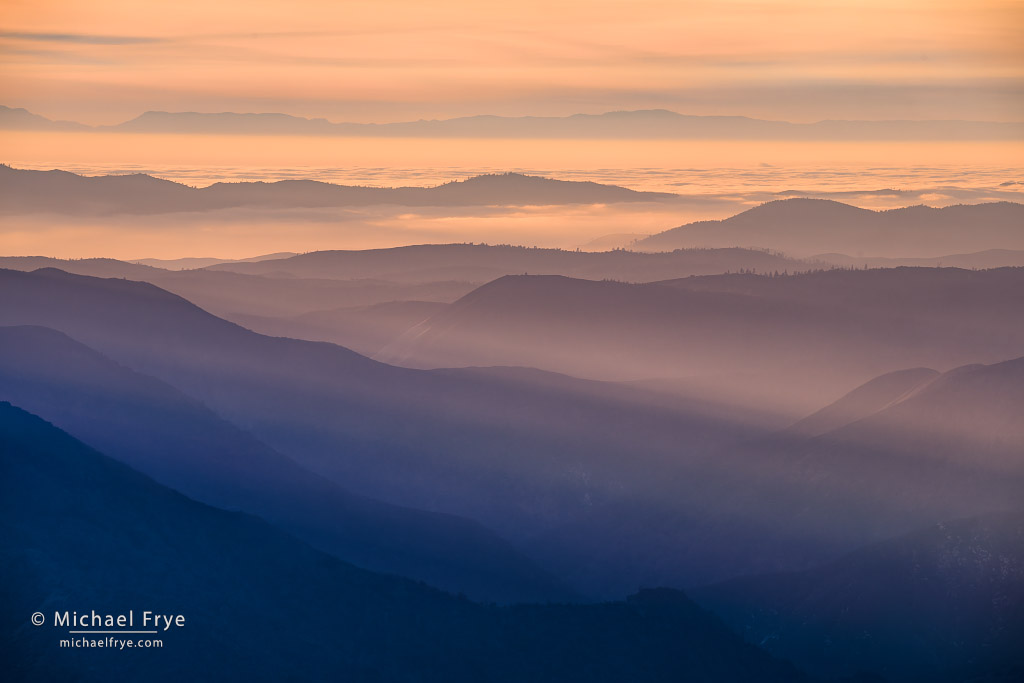
Mist, sunbeams, and a fog layer, Sierra Nevada foothills, California.
We’ve had a persistent temperature inversion in California’s Central Valley over the last three weeks. That’s a long time; in fact I can’t remember an inversion lasting this long before.
Normally temperatures get colder at higher altitudes. This is partially due to the sun warming the earth, which warms the air directly above it. Also, higher air is lower in pressure, which results in lower temperatures.
(more…)
by Michael Frye | Nov 30, 2025 | Light and Weather, Travels and Stories
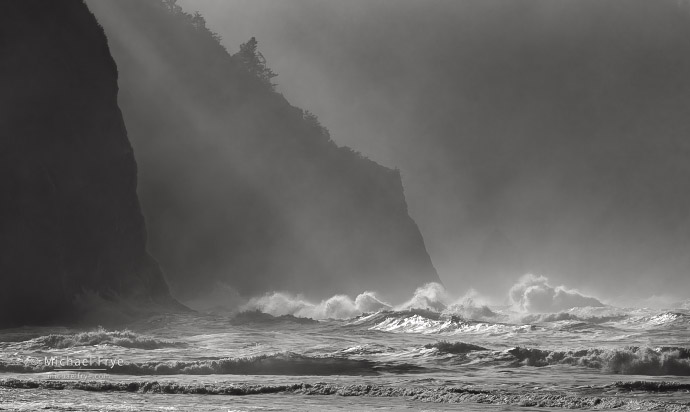
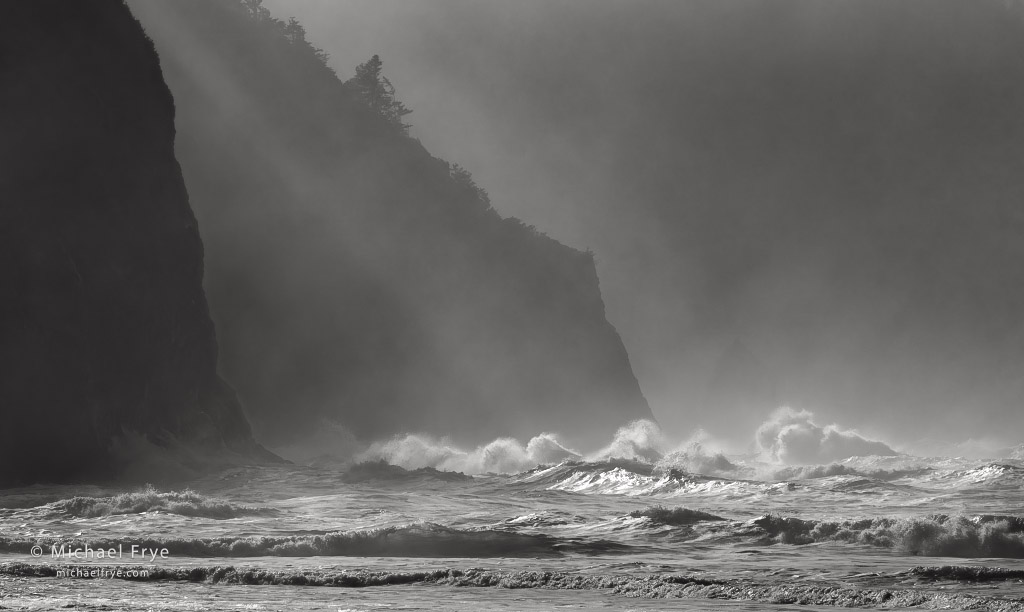
Waves, fog, and sunbeams along the Oregon Coast. I waited for the sun to crest the ridge on the left and light the large waves rolling in, using a fast shutter speed (1/500 sec.) to freeze the motion. I liked this moment, with sunbeams and a series of wave splashes.
Claudia and I just returned from our annual trip to the Oregon Coast. Our workshop went really well, with a small, wonderful group of participants. And we had some beautiful light to work with.
One of the things I told the group was how much I love the variety of light and moods you can photograph along the Oregon Coast. The weather seems to change constantly (in November at least). One day it’s stormy and dramatic, the next day (or minute) it’s foggy and ethereal. Or something else. With the changeable weather, and the shifting tides and waves, it’s a dynamic environment, where you have to be on your toes to capture moments when the light, weather, and waves come together to create something interesting and beautiful.
Those moments are frequent, but fleeting. You need to anticipate when something might happen, or be able to switch gears quickly when things change.
(more…)