
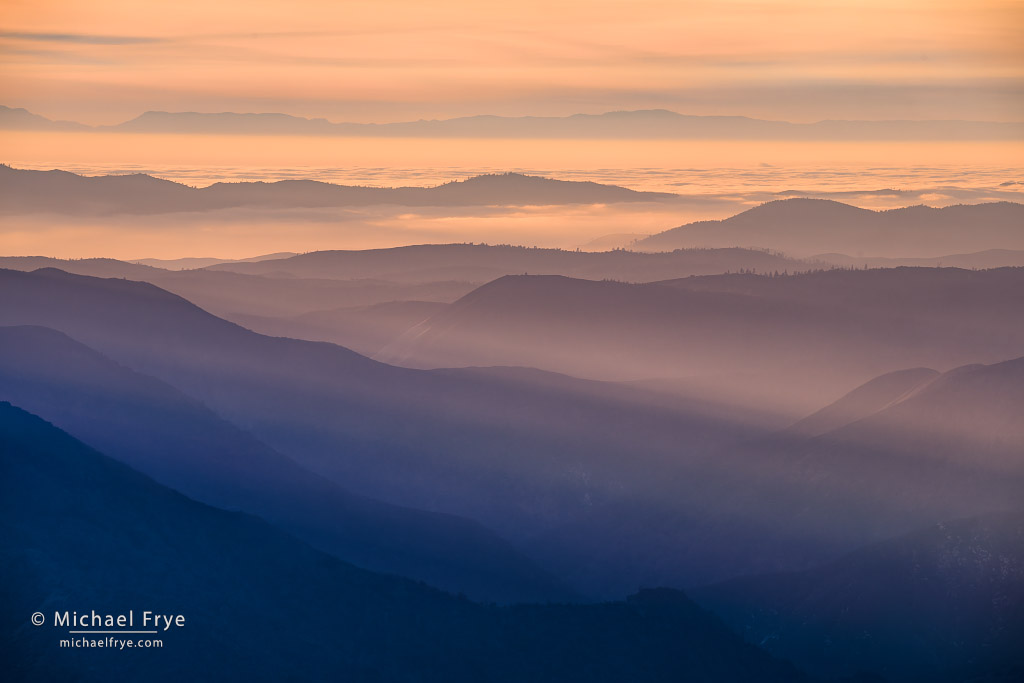
Mist, sunbeams, and a fog layer, Sierra Nevada foothills, California.
We’ve had a persistent temperature inversion in California’s Central Valley over the last three weeks. That’s a long time; in fact I can’t remember an inversion lasting this long before.
Normally temperatures get colder at higher altitudes. This is partially due to the sun warming the earth, which warms the air directly above it. Also, higher air is lower in pressure, which results in lower temperatures.
A temperature inversion flips this upside down, with colder temperatures near the ground, and warmer temperatures higher up. There are several mechanisms that can create this, but in California’s Central Valley it’s almost always caused by radiational cooling.
On calm, clear nights, radiation (heat energy) from the earth escapes into space, cooling the ground, and cooling the air directly above the ground, while the air above remains warm – thus creating an inversion. With sufficient moisture, temperatures near the surface reach the dew point, forming fog.
The Central Valley got some significant rain in November, adding moisture to the ground. That was followed by a series of clear, calm, cold nights, which created fog. Because the fog was thick, the low winter sun couldn’t burn off the fog during the day, so the fog lasted all day long, day after day. Gradually that fog layer lifted, forming what meteorologists call a stratus deck. This looks like low overcast in the Central Valley, but if you drive into the Sierra foothills you’ll climb into the clouds, and into the fog, then emerge above the fog layer into warm sunshine.
Persistently calm, clear conditions have prevented the air from mixing, keeping the inversion and stratus deck in place. People in the Central Valley have endured three weeks of overcast skies and cold, damp air, while here in the Sierra foothills it’s been warm and sunny.
But that fog layer pushing up into the Sierra foothills has allowed me to get above the fog and photograph the ocean of clouds below. It seems magical to be above the clouds like that – standing on solid ground, but feeling like you’re floating high above the clouds, and above the mundane day-to-day concerns of life down below.
And those conditions are, to me, highly photogenic. I’ve been out early and late many times in recent weeks, in different locations, looking for views over the fog below. It’s been really fun to photograph. Here are some of my favorite images of the inversion.
— Michael Frye
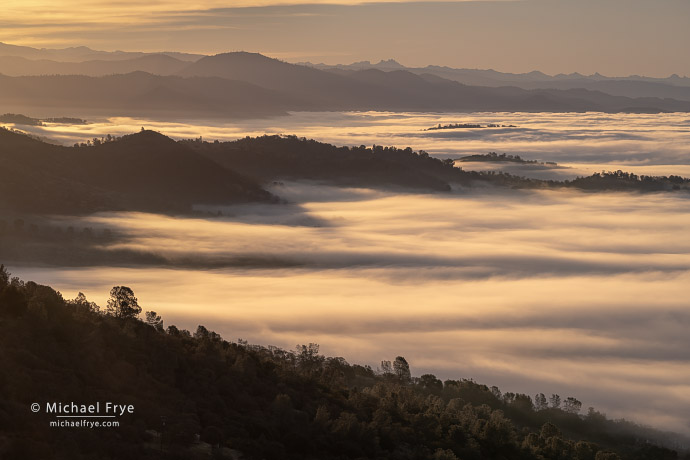
Fog and distant peaks at sunrise from the Sierra Nevada foothills, California.
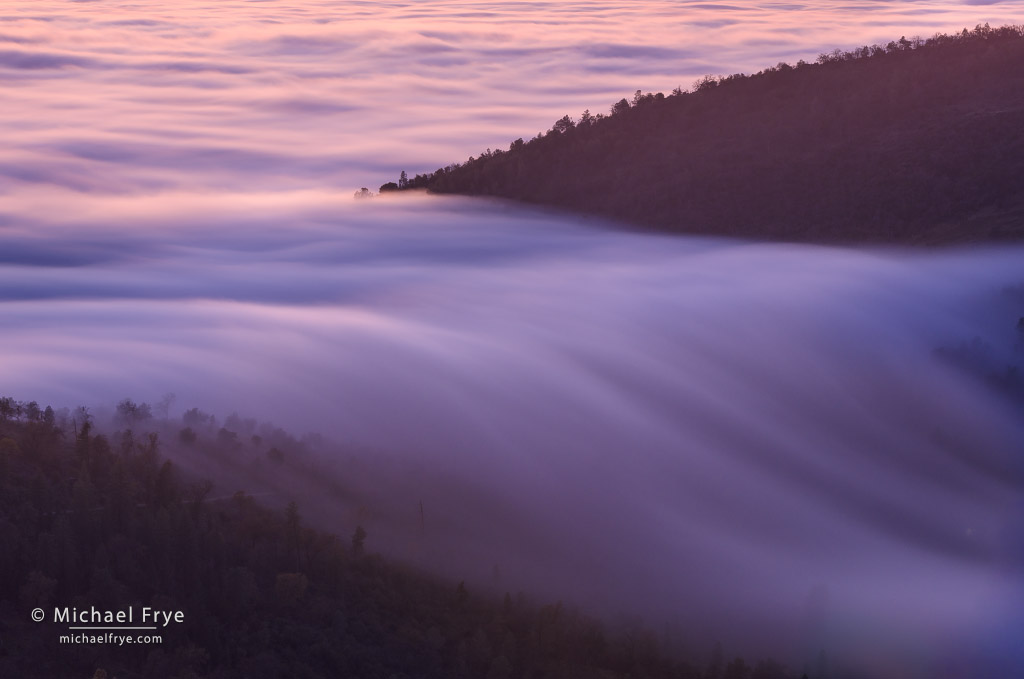
Fog pouring into the Sierra Nevada foothills at dusk, California. This was a 90-second exposure to show the movement of the fog and how it was pouring over a ridge.
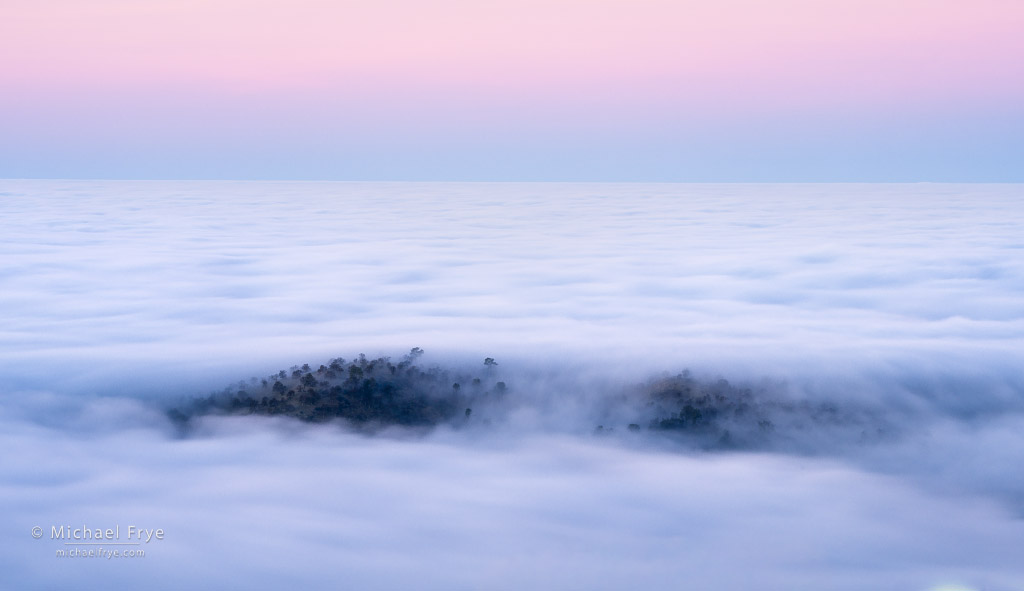
Fog over the Central Valley at dawn, Sierra Nevada foothills, California
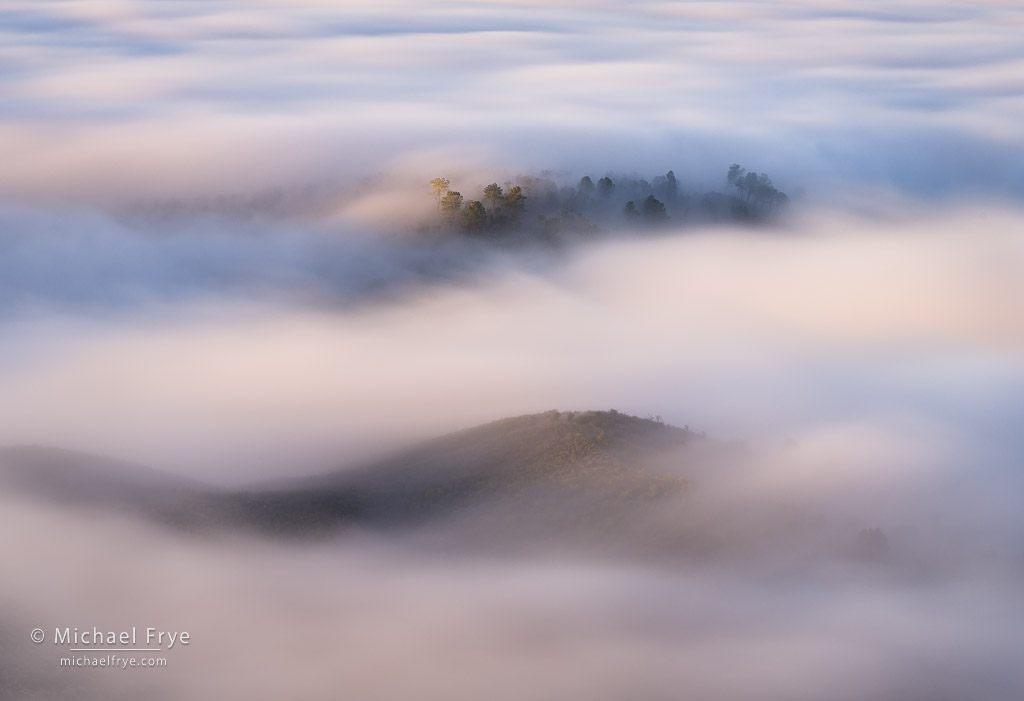
Islands in the fog, Sierra Nevada foothills, California. This was another long exposure (30 seconds) to soften the fog and add a more ethereal look to the image.
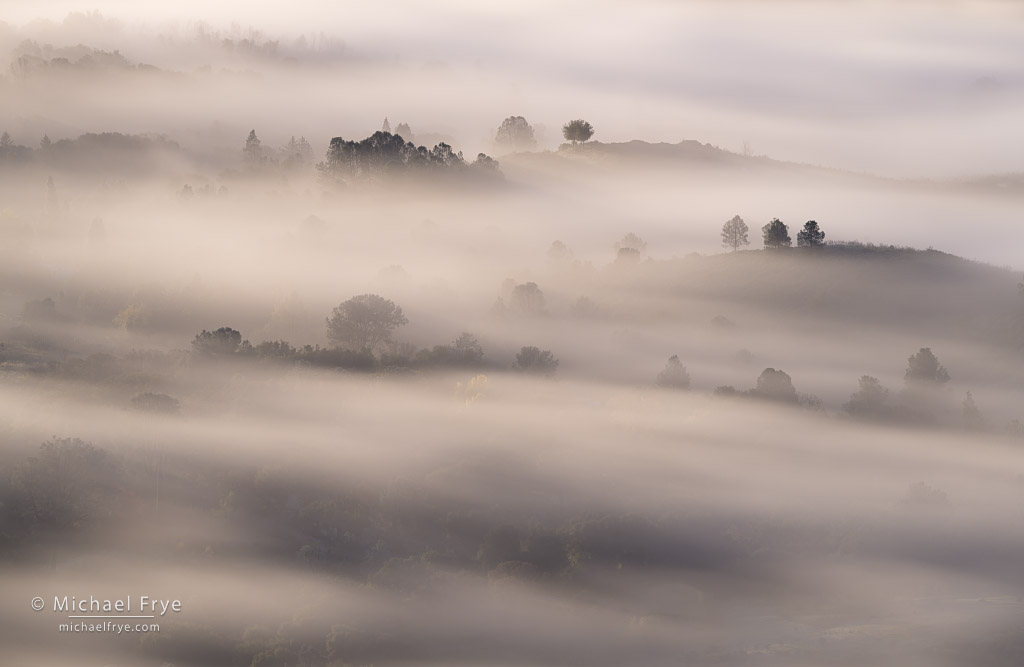
Trees and fog, Sierra Nevada foothills, California. A 15-second exposure to create a sense of flow and movement.
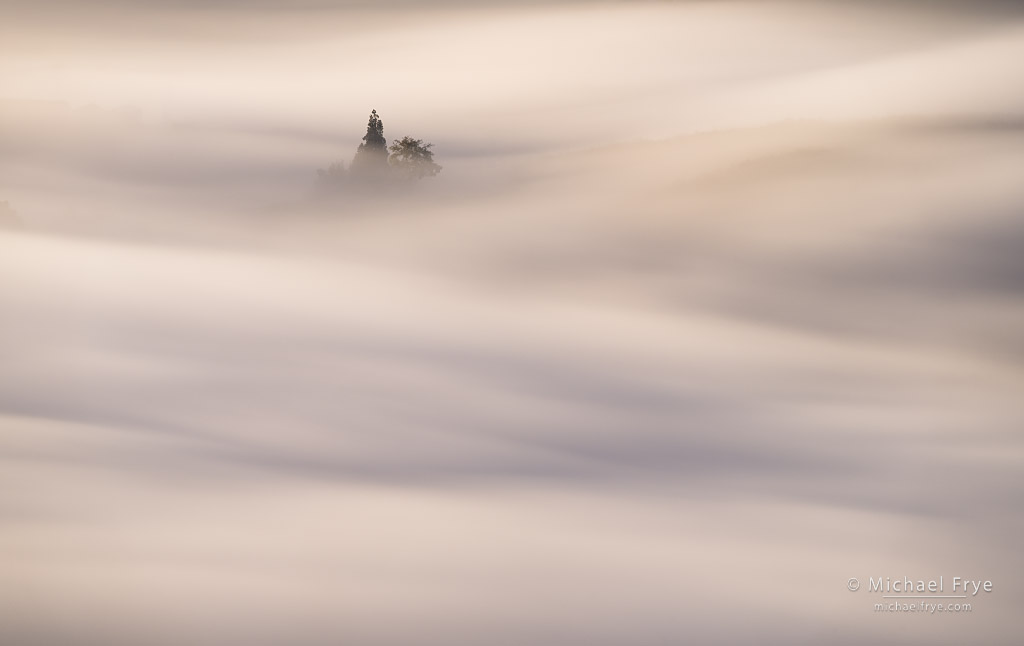
Trees poking out of a fog layer, Sierra Nevada foothills, California. Another 15-second exposure.
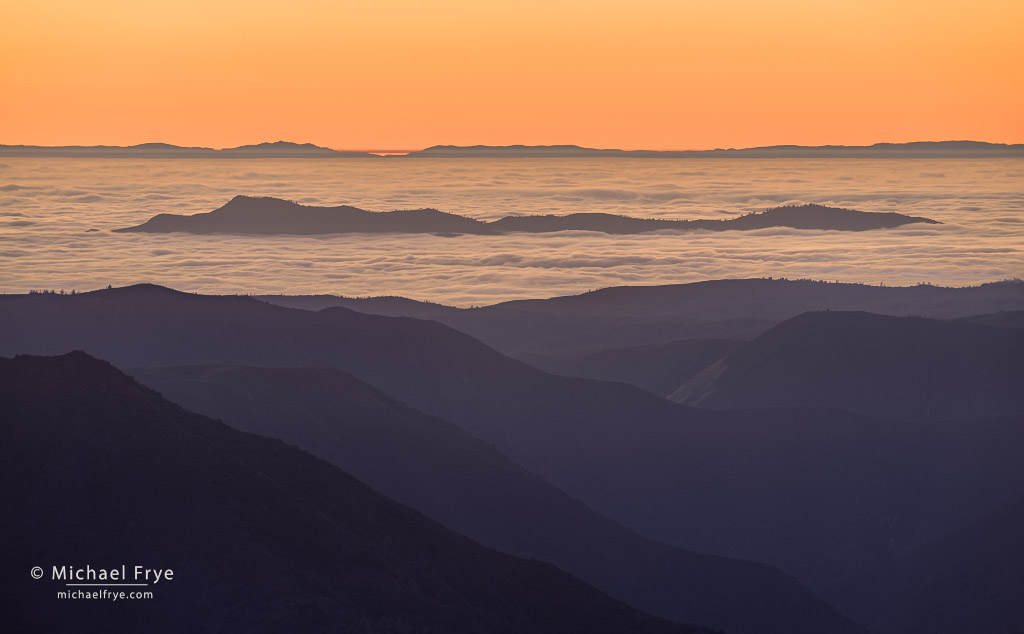
Sunset with fog over the San Joaquin Valley, from the Sierra Nevada foothills, California
Related Posts: Foothill Fog; Poconip Fog
Michael Frye is a professional photographer specializing in landscapes and nature. He lives near Yosemite National Park in California, but travels extensively to photograph natural landscapes in the American West and throughout the world.
Michael uses light, weather, and design to make photographs that capture the mood of the landscape, and convey the beauty, power, and mystery of nature. His work has received numerous awards, including the North American Nature Photography Association’s 2023 award for Fine Art in Nature Photography. Michael’s photographs have appeared in publications around the world, and he’s the author and/or principal photographer of several books, including Digital Landscape Photography: In the Footsteps of Ansel Adams and the Great Masters, and The Photographer’s Guide to Yosemite.
Michael loves to share his knowledge of photography through articles, books, workshops, online courses, and his blog. He’s taught over 200 workshops focused on landscape photography, night photography, digital image processing, and printing.




The image of the fog flowing downward (image #3) is outstanding!
Thank you Alan!
Wonderful images of that thick fog layer from higher up looking down Michael. Your explanation of the conditions that have to occur for that inversion to form is spot on. I lived in the valley down there in the late 70’s and I remember long stretches of that fog layer hanging around. It was as cold and damp as you described, and not fun to drive in at times.
Thanks Ted! The Valley is a foggy place in winter, for sure.
Spectacular images Michael! And thank you for the detailed inversion explanation.
Thanks very much Jacob!
Hi Michael – thanks for sharing the beautiful images and the explanation of the inversion phenomenon. Lorraine and I live in Davis, northern Sacramento valley.
What elevation were you at to be above the fog? We went to the Marin headlands last week hoping to get some good fog photography but it all just gray and we could not get above the fog layer.
Thanks Steve!
The fog elevation varies, and I’m sure there are differences in the fog level between Marin and Mariposa. I think the top of the fog layer around here has been around 2,000 feet most of the last three weeks, but sometimes it’s been higher or lower.
I feel blessed to have viewed your incredible artistic talent! Thank you!
Seven incredible photos creates a challenge to make a preference for which is the “best.” The “90 second exposure” photo is my favorite. They all have beautiful views. I’d have to say the “90 seconds” is my favorite because it makes me think about “the pouring over the ridge.” How in the world can you make a scene with that fall.